Basel Läckerli: history, recipe and the best addresses in Basel
Honey, almonds, candied peel, spices and a sugar glaze: the Läckerli is Basel's year-round biscuit. Where it comes from, how it is made, where to buy it, from the Läckerli Huus flagship to the Jakob's manufactory, and what a tin costs.
When you leave Basel, you take Läckerli with you. This small, firm spiced biscuit with its thin sugar glaze is the Basel souvenir par excellence, and unlike Mehlsuppe or Mässmogge you can buy it all year round.
This page explains what makes a real Basel Läckerli, where it comes from and where to buy it in the city. The other Basel specialities, from Fasnacht food to the traditional tavern, are in eating in Basel.
What is a Basel Läckerli?
A Basel Läckerli is made from flour, honey and sugar, almonds or hazelnuts, candied lemon and orange peel and spices such as cinnamon, cloves and nutmeg. Many recipes add kirsch, but it is not essential.
The dough is rolled into a sheet and baked, brushed with a sugar glaze while still warm and then cut into rectangles. The result is firm, spicy and sweet, not a soft gingerbread.
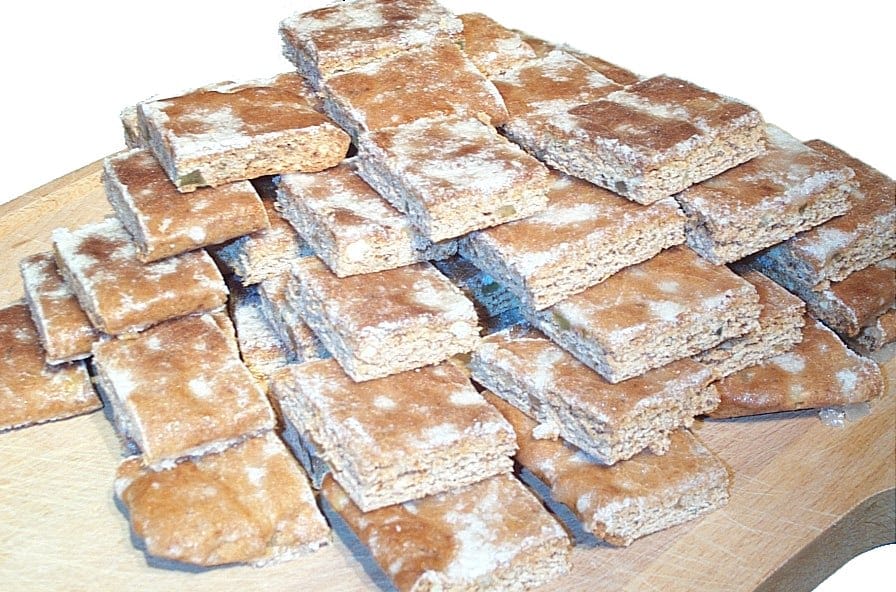
Photo: Manuel Schneider, CC BY-SA 3.0, via Wikimedia Commons
Where does the Läckerli come from?
Spiced honey biscuits are known in many trading cities, and in Basel they have been at home for centuries. Jakob's traces its own history back to the 17th century, to a coffee house where Läckerli were already being baked.
The oldest surviving Basel recipe dates from 1744 and comes from Anna Maria Falkeysen. Neither an inventor nor a founding year of the Läckerli itself can be proven, and anyone who names one is telling a legend.
The two best-known firms are younger than the biscuit. Jakob's has existed in its present form since 1753, and Läckerli Huus was founded at the start of the 20th century, in 1903 or 1904 depending on the source.
Läckerli or Leckerli?
Both mean the same biscuit. "Läckerli" with an ä is the Basel German spelling, which Läckerli Huus carries in its name; "Leckerli" is the standard German spelling.
Jakob's spells its biscuit with a y: Basler Leckerly. Ask for "Läckerli" in any shop and you will be understood.
Where do you buy Läckerli in Basel?
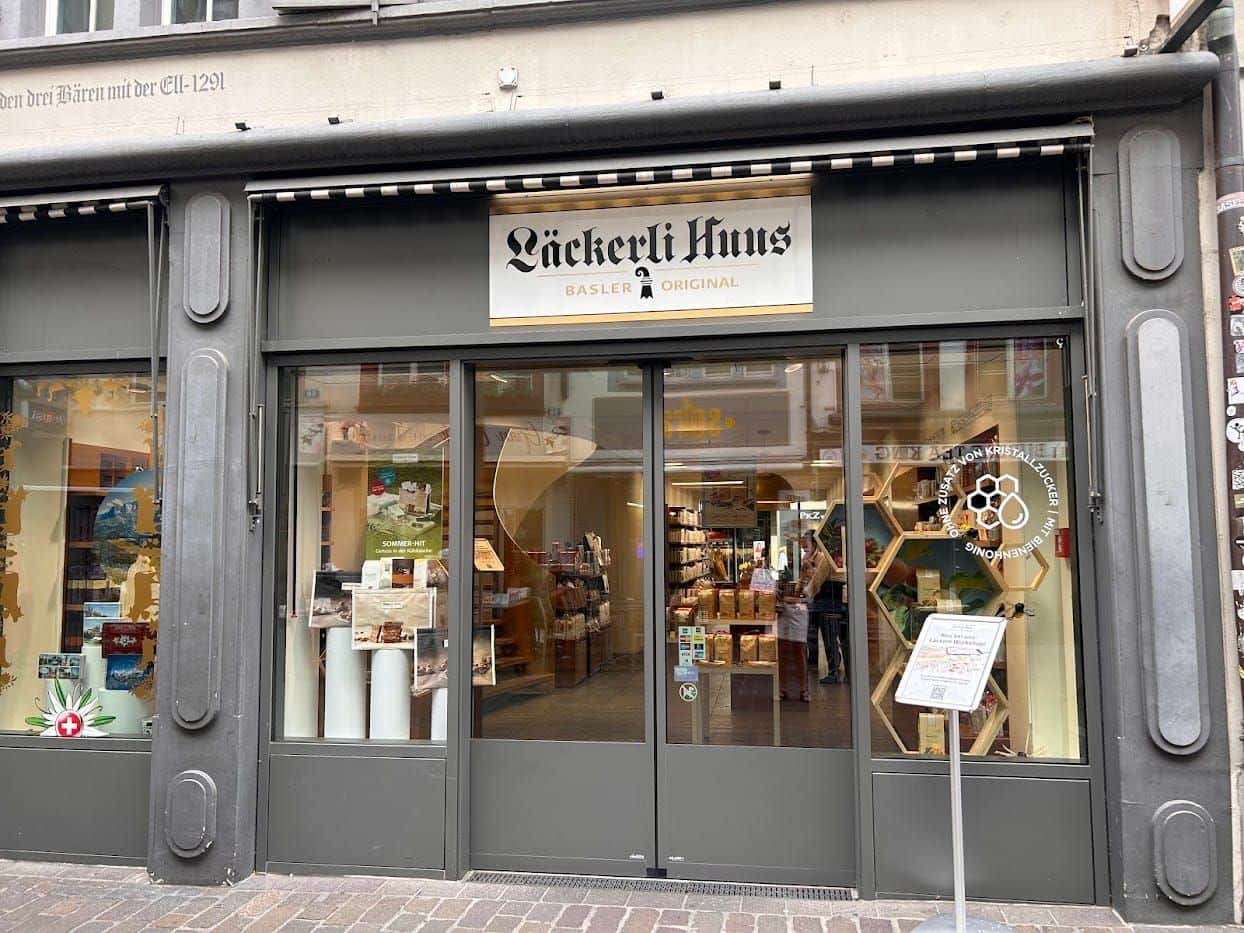
Läckerli Huus has had its flagship shop at Gerbergasse 57, between Barfüsserplatz and Marktplatz, since 1973, in a building first mentioned in 1291. Further shops are on Greifengasse in Kleinbasel and in the concourse of Basel SBB station, handy for a last purchase before the train.
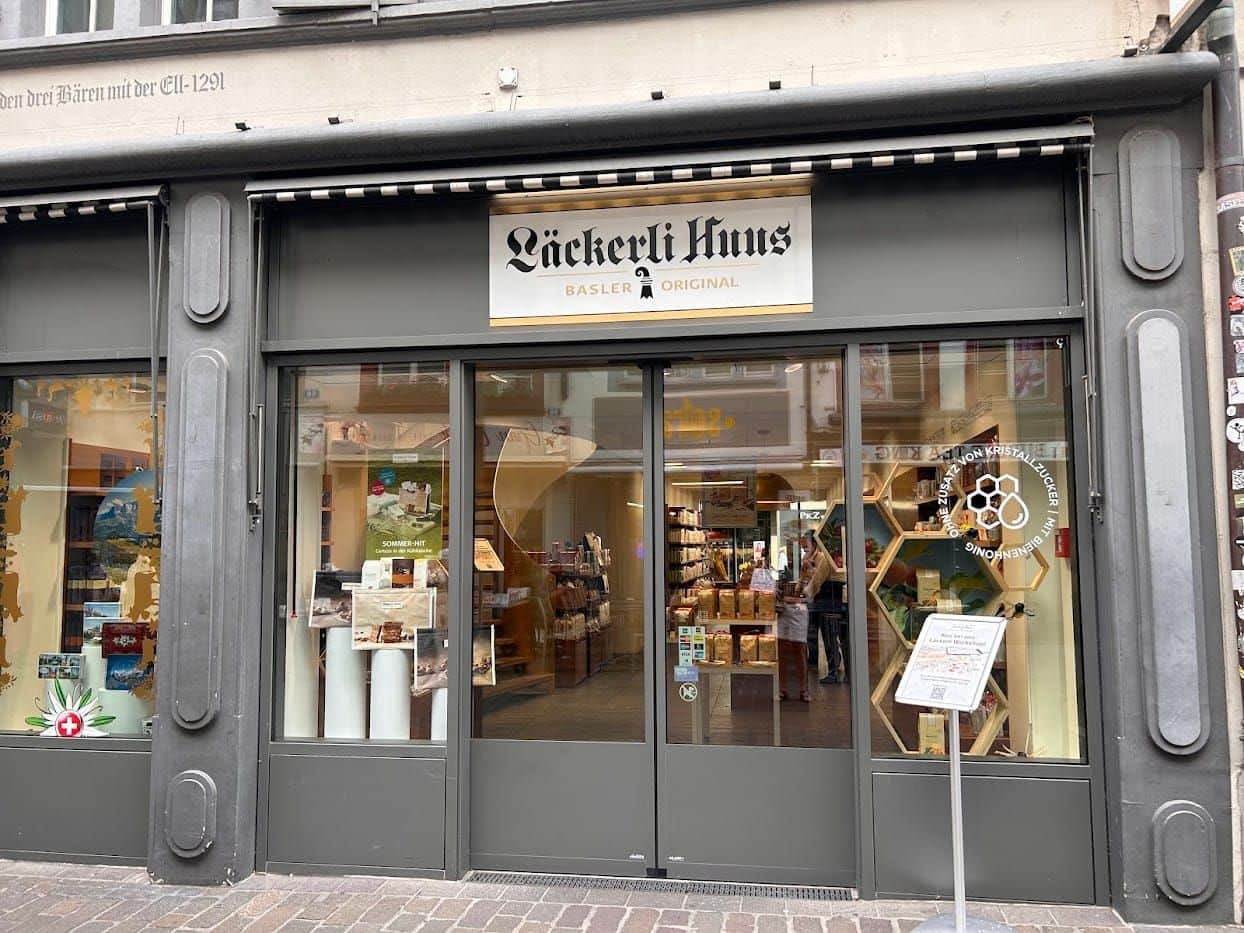
Läckerli Huus on Gerbergasse★ 4,6 · 275 reviews
Jakob's Basler Leckerly sells at Spalenberg 26, three minutes from Marktplatz, and at its own manufactory at St. Johanns-Vorstadt 47, where the baking is done. The Leckerly are made by hand and are thicker than some industrial versions.
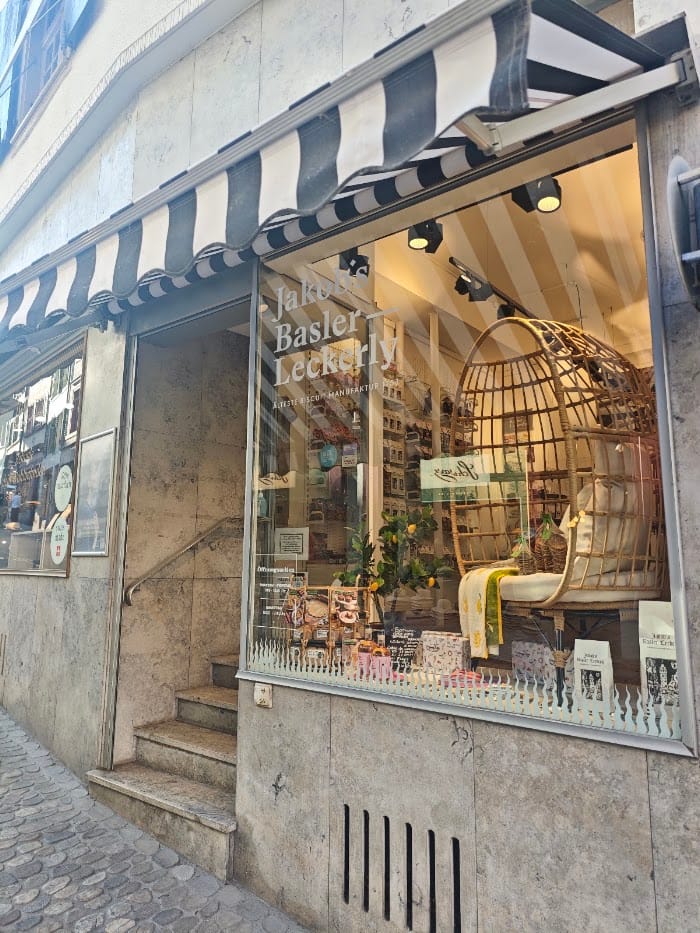
Jakob's Basler Leckerly★ 4,9 · 455 reviews
Many of the city's confectioners and bakeries also bake their own Läckerli, and the supermarkets stock them. For a gift it is worth going to one of the two firms, which have their own tins and gift packs.
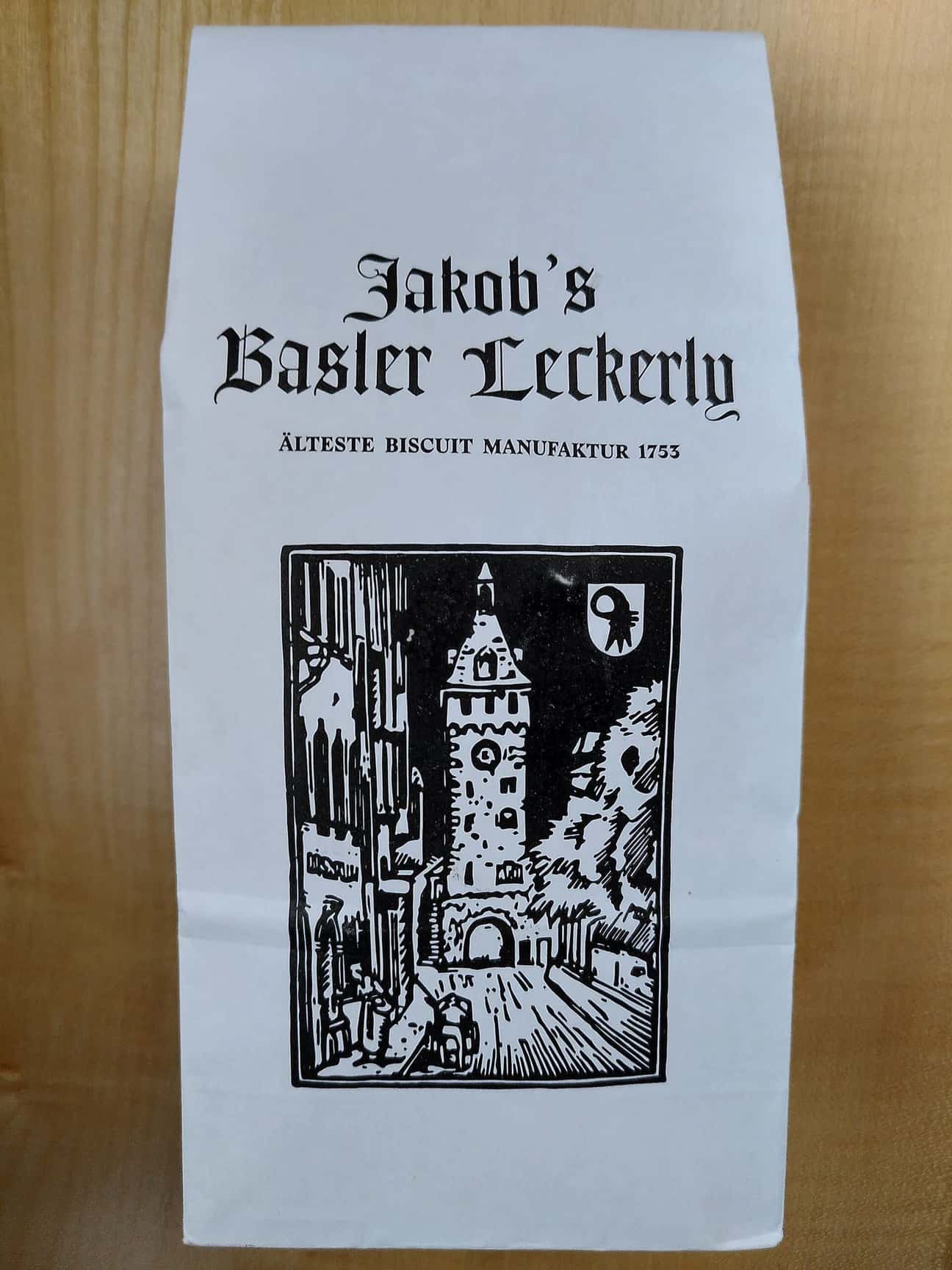
Photo: Hadi, CC0, via Wikimedia Commons
How much does a tin of Läckerli cost?
The price depends mainly on the packaging. At Jakob's, a 250-gram bag of Basler Läckerli Classic cost CHF 10.80 in October 2026, the small 80-gram tin CHF 16.50.
So for yourself you take the bag, and for a present the tin. The Läckerli Huus shops also sell gift tins in many sizes, often mixed with other biscuits and chocolate.
Can you bake your own Läckerli?
Yes, on the first floor of the Gerbergasse shop, Läckerli Huus runs a workshop where you make and decorate your own Läckerli. It costs CHF 180 for up to six people, CHF 30 for each extra person, and must be booked.
For a family or a small group it is a good plan for bad weather, with more ideas in Basel in the rain. The shop itself is open Monday to Friday, 9am to 6.30pm.
How do you bake Läckerli at home?
Most Basel family recipes follow the same steps. Honey and sugar are warmed until the sugar dissolves, then the spices, chopped almonds or hazelnuts and the candied lemon and orange peel go in, often with a dash of kirsch.
Only then is the flour worked in, until you have a firm, sticky dough. Many recipes let it rest overnight so that the spices come together.
The dough is rolled out on a baking tray to about a finger's thickness and baked. The crucial part comes afterwards: the sheet is brushed with sugar glaze while still hot and cut into rectangles at once, because once cool it breaks.
Home-made Läckerli are often hard on the first day. In a closed tin they soften after a few days, which is why many Basel families bake them weeks before Christmas.
How do you recognise a good Läckerli?
- The ingredients list: honey, nuts and candied fruit should come near the top, not syrup and flavourings.
- The glaze: thin and even, it should protect the biscuit rather than drown it in sugar.
- The bite: firm but not rock-hard, with a spicy aftertaste of cinnamon and cloves.
- The thickness: handmade Läckerli are usually thicker than the industrial ones from the supermarket.
The easiest test is a comparison: buy two small bags from different firms and taste them side by side. Then buy the one you like, not the prettiest tin.
When do people eat Läckerli in Basel?
All year round, with coffee, as a small gift for a host or as a greeting from Basel. Advent is the shops' high season, when Basel families fill tins for relatives abroad.
On business trips and at the big fairs, Läckerli are the souvenir you grab in the station concourse. If you are in town for a fair, the shop at Basel SBB station is on your way to the train.
How long do Läckerli keep?
Läckerli are a dry biscuit and keep a long time if stored closed, cool and dry. They harden over time, and according to an old household tip a piece of apple in the tin keeps them soft.
The exact best-before date is on every pack. On the flight home Läckerli are no problem, as they do not count as liquids.
Which other Basel sweets are there?
- Mässmogge: the colourful sugar stick with a hazelnut filling, at the stalls of the Basel Herbstmesse.
- Fasnachtskiechli: thin pastries dusted with icing sugar, around Basel Fasnacht.
- Basel Magenbrot and Rahmtäfeli: sold by Jakob's alongside the Leckerly.
- Grittibänz: the little man made of plaited bread dough for St Nicholas on 6 December, in the bakeries during the Basel Christmas market.
To combine Läckerli with a stroll through the Old Town, follow the Basel Old Town walk: it passes Marktplatz and Spalenberg. If you are staying overnight, the districts are compared in where to stay in Basel.
Taste Basel with someone who knows the city: the tours and activities in Basel include Old Town walks that pass the shops of Gerbergasse and Spalenberg. What is included is stated in each description.
See tours in Basel →Partner link: booking through this link supports our editorial team at no extra cost to you.Sources: Jakob's Basler Leckerly (company history, online shop, prices checked on 23 October 2026), Läckerli Huus (history, workshop, opening hours 2026), Schwabe Verlag, "Vom Teig zum Daig" (oldest recipe), Falstaff (2025), Wikipedia (Basler Läckerli, Läckerli Huus).
Frequently asked questions
What is in a Basel Läckerli?
Where can you buy the best Läckerli in Basel?
How much do Basel Läckerli cost?
Can you bake Läckerli in Basel?
Samuel Tschudin
Samuel spent eight years guiding groups through the Old Town, from Münsterplatz to the Rhine promenade. He builds his routes on foot, watch in hand, and cuts whatever does not fit into a real day. He would rather write that a visit is not worth the ticket than pad out a list.