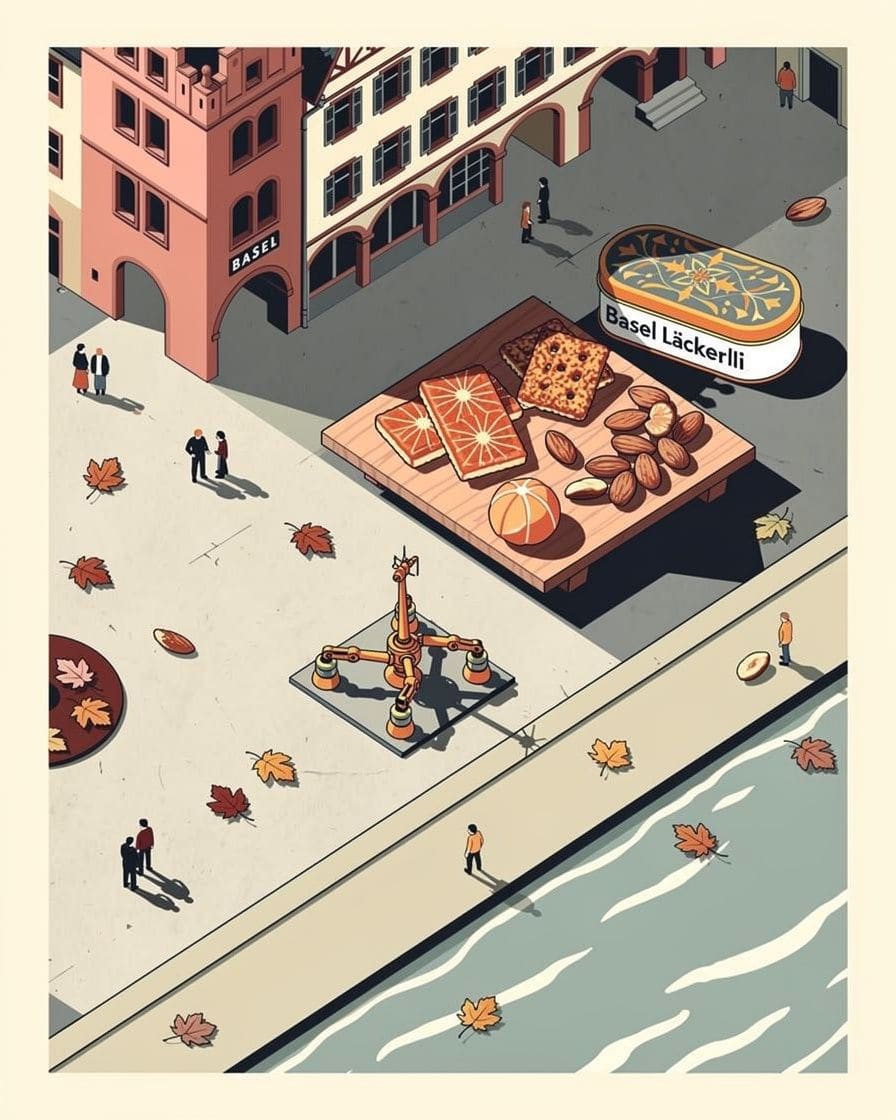
Eating in Basel: specialities, prices and where locals eat
Basel has a few genuine specialities, most of them tied to particular times of year, and a cuisine that is mainly international. What is from Basel and what is not, what a meal costs, when kitchens are open and which taverns locals themselves eat in, from the Hasenburg to the Löwenzorn.
Basel has no cuisine you could sum up in one dish. The city sits on a border, lives off its university, trade and art, and eats accordingly: German-Swiss, with influences from both neighbours and a large international offering.
Genuine Basel specialities do exist, but most are tied to a festival. This page separates what is from Basel from what is for tourists, gives price guides in francs, explains tipping and kitchen hours, and shows in which districts you can eat without sitting in a stage set.
What is genuinely from Basel?
| Speciality | What it is | When you find it |
|---|---|---|
| Basler Läckerli | a firm biscuit square with honey, candied fruit, almonds or hazelnuts, spices and a sugar glaze | all year |
| Mehlsuppe | soup made from roasted flour, onions, butter and stock | during Fasnacht |
| Fasnachtswähe | a thin pastry flatbread, with cheese and cream depending on the bakery | around Fasnacht |
| Basler Mässmogge | a hard, colourful sugar stick filled with hazelnut or praline | at the Herbstmesse |
The Läckerli is the year-round flagship and belongs to the family of long-keeping spiced biscuits. Gift tins and chocolate or coffee varieties are modern souvenir forms, but the biscuit itself has deep roots in Basel.
The oldest surviving Basel recipe dates from 1744, and nobody knows who invented the biscuit. Where to buy Läckerli, what a tin costs and where to bake your own are in our guide to Basel Läckerli.
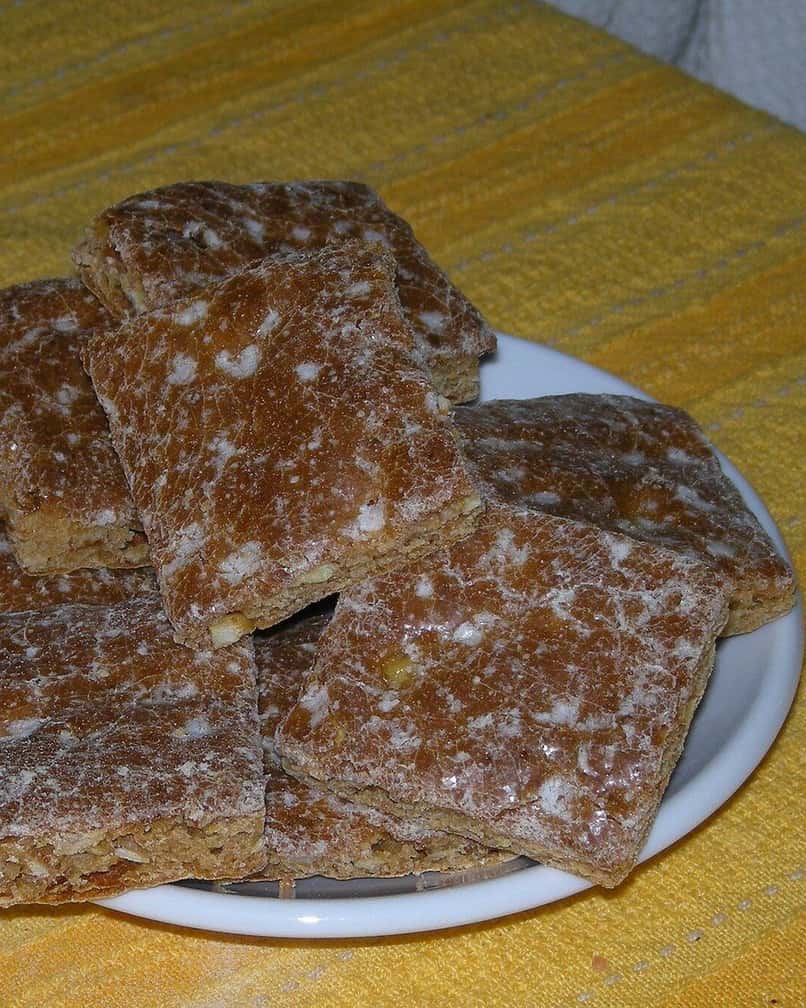
Photo: Velq1958, CC BY 3.0, via Wikimedia Commons
When can you get Mehlsuppe and Mässmogge?
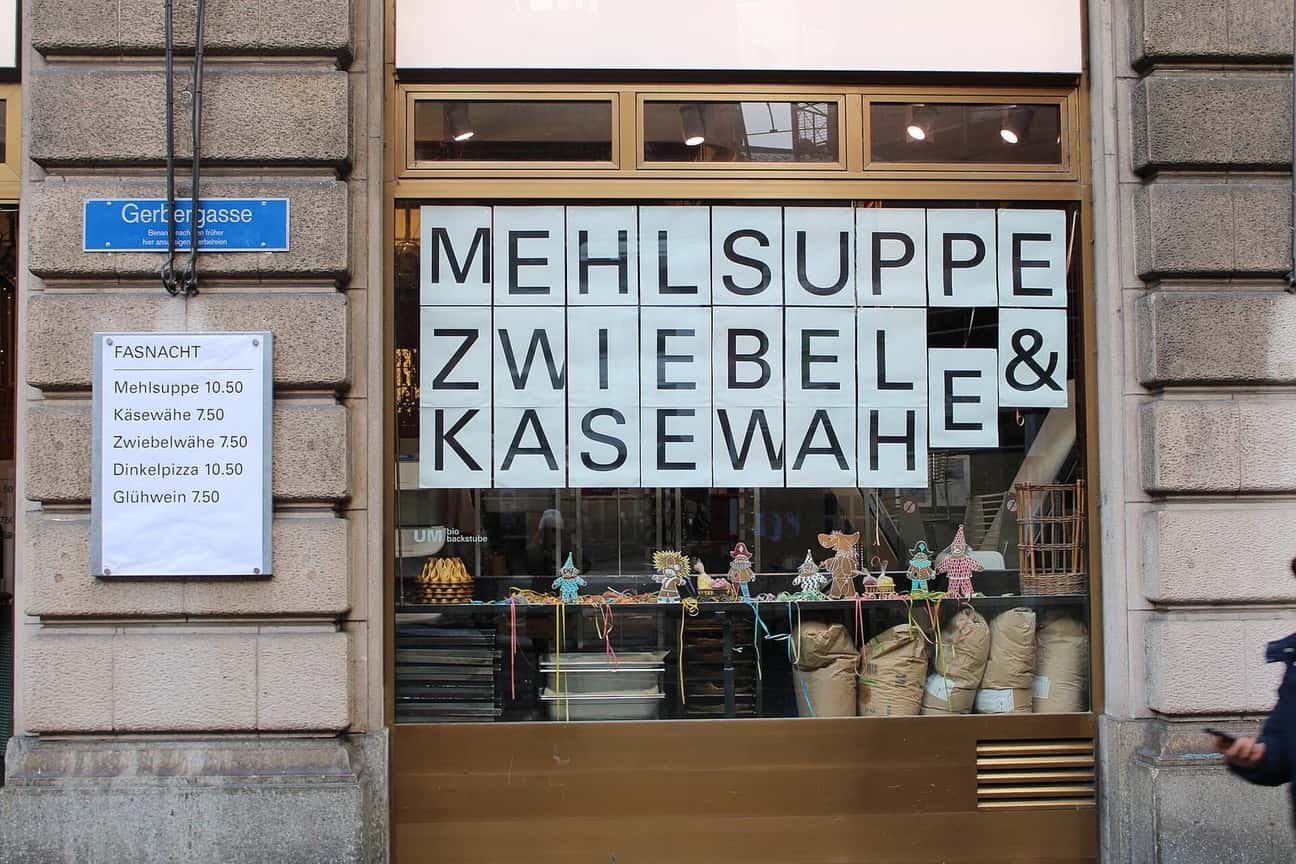
Photo: Sparrow (2019), CC0, via Wikimedia Commons
Mehlsuppe, flour soup, belongs to Fasnacht, traditionally eaten in the early hours after the Morgestraich. Outside the carnival days it hardly appears on any menu, and a guide that sells it as a year-round dish is misleading.
When the next Fasnacht starts and where to eat during the night is described in Basel Fasnacht. The Fasnachtswähe follows the same calendar, and its recipe differs from bakery to bakery.
You will not find Mässmogge in a restaurant but at the Herbstmesse stalls and in confectioners'. The fair's dates and squares are in Basel Herbstmesse, and Advent specialities in Basel Christmas market.
What is sold as Basel food but is not?
- Fondue and raclette: Swiss dishes, not Basel ones.
- Rösti: at home all over Switzerland.
- Flammkuchen: comes from the French side of the Upper Rhine.
- Sausages, sauerkraut, Rhineland cooking: regional in the broad sense.
- Brunch, bowls, burgers, specialty coffee: a modern urban offering, not heritage.
That does not mean these dishes are bad. They are simply no reason to eat them in Basel rather than anywhere else.
What does a meal cost in Basel?
| Type of meal | Guide per person | Watch out for |
|---|---|---|
| Bakery, snack bar, sandwich, kebab | 8 to 20 CHF | drinks often extra |
| Café, breakfast, pastry | 8 to 25 CHF | eggs, juice and bread push up the bill |
| Markthalle, food stalls | 15 to 35 CHF | each stall has its own prices |
| Brunch | 25 to 55 CHF | buffet, plates and drinks are not comparable |
| Neighbourhood restaurant, main course | 25 to 45 CHF | with a drink and dessert 45 to 70 CHF |
| Brasserie or restaurant in the centre | 35 to 65 CHF | meat and fish often above that |
| Fine dining, tasting menu | 90 to 220 CHF and more | wine pairing extra |
| Eating during Art Basel week | 45 to 100 CHF and more | special menus, minimum spend, private events |
These figures are guides from our research for 2025 and 2026, not official statistics and not averages. Menus change, and surcharges are not shown the same way everywhere.
The most effective saving is the lunch menu, which in many restaurants is much cheaper than the evening menu. What a whole day in Basel costs, with hotel, tram and museums, is worked out in how expensive is Basel?.
When are kitchens open, and do you need to book?
There is no single Basel rule, but a common pattern: lunch service roughly 11:30am to 2pm, dinner service roughly 6pm to 10pm, and in between, at many places, no hot food. Sunday evening and Monday are common closing days.
Cafés open earlier, but often serve breakfast for only a few hours. A place may be open while the kitchen has already closed, and the hours on map services, social media and a restaurant's own website contradict each other fairly often.
Book for Friday and Saturday evenings, for brunch, for groups, for popular small places and for any fine-dining restaurant. During Art Basel, Fasnacht and the big trade fairs that applies to almost every venue; more in Messe Basel.
How much should you tip?
In Switzerland service is included in the price, and tipping is not an obligation as it is in North America. Rounding up or leaving about 5 to 10 percent for good service is common, with no fixed rule.
- Tap water: Basel tap water is drinkable, but in restaurants it is sometimes charged for or not offered unprompted.
- Bread and sides: may cost extra.
- Splitting the bill: not always easy for large groups.
- Paying in euros: not guaranteed, and at the card terminal paying in francs is usually cheaper than the conversion offered.
Where you can get free water around town, at fountains and public points, is explained in luggage storage, toilets and drinking water in Basel.
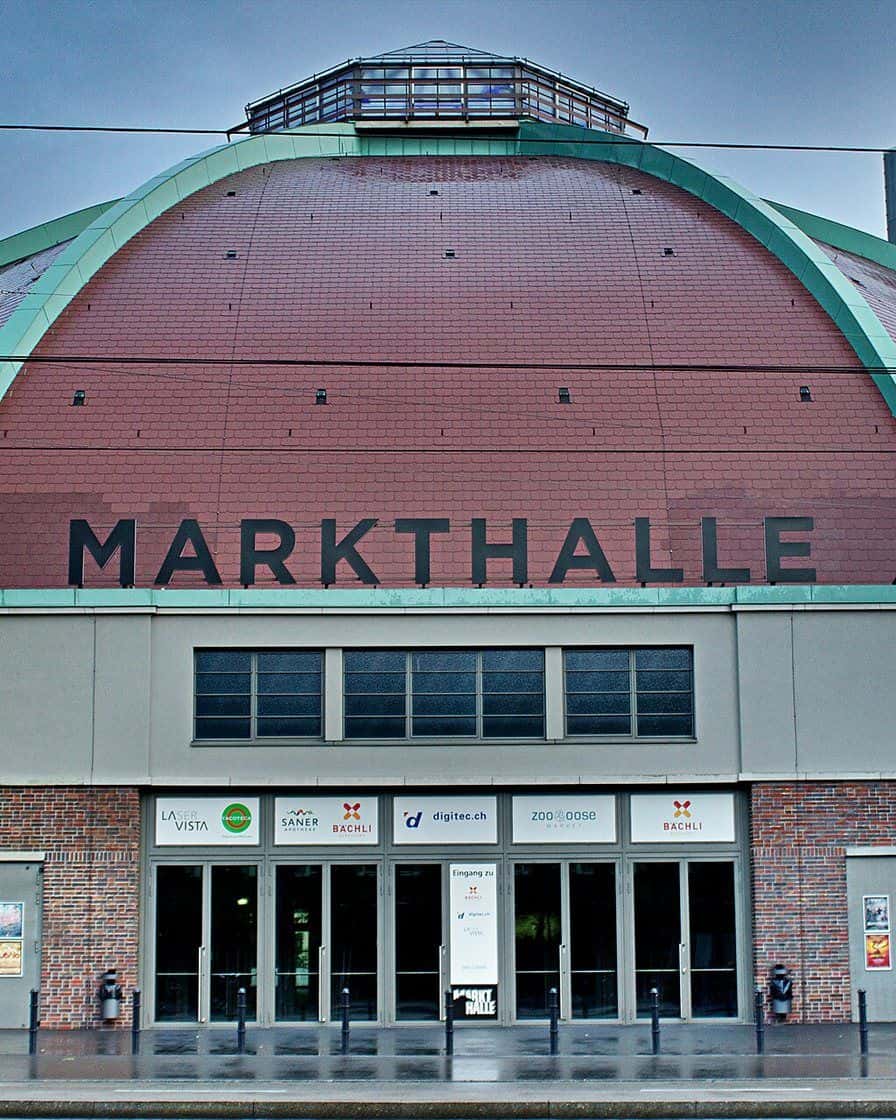
Photo: Ryxios, CC BY-SA 3.0, via Wikimedia Commons
Which taverns serve real Basel food?
The Basel "Beiz" is the Old Town tavern: wood panelling, a short menu, a regulars' table. Four houses around Marktplatz show what the city means by Basel cooking, all within five minutes' walk of each other.
The Hasenburg on Schneidergasse, also "Château Lapin" on its facade, is known for its "Suuri Kalbs Läberli", sour calf's liver with rösti. The house was rebuilt after the earthquake of 1356, and food has been served there for more than 120 years.
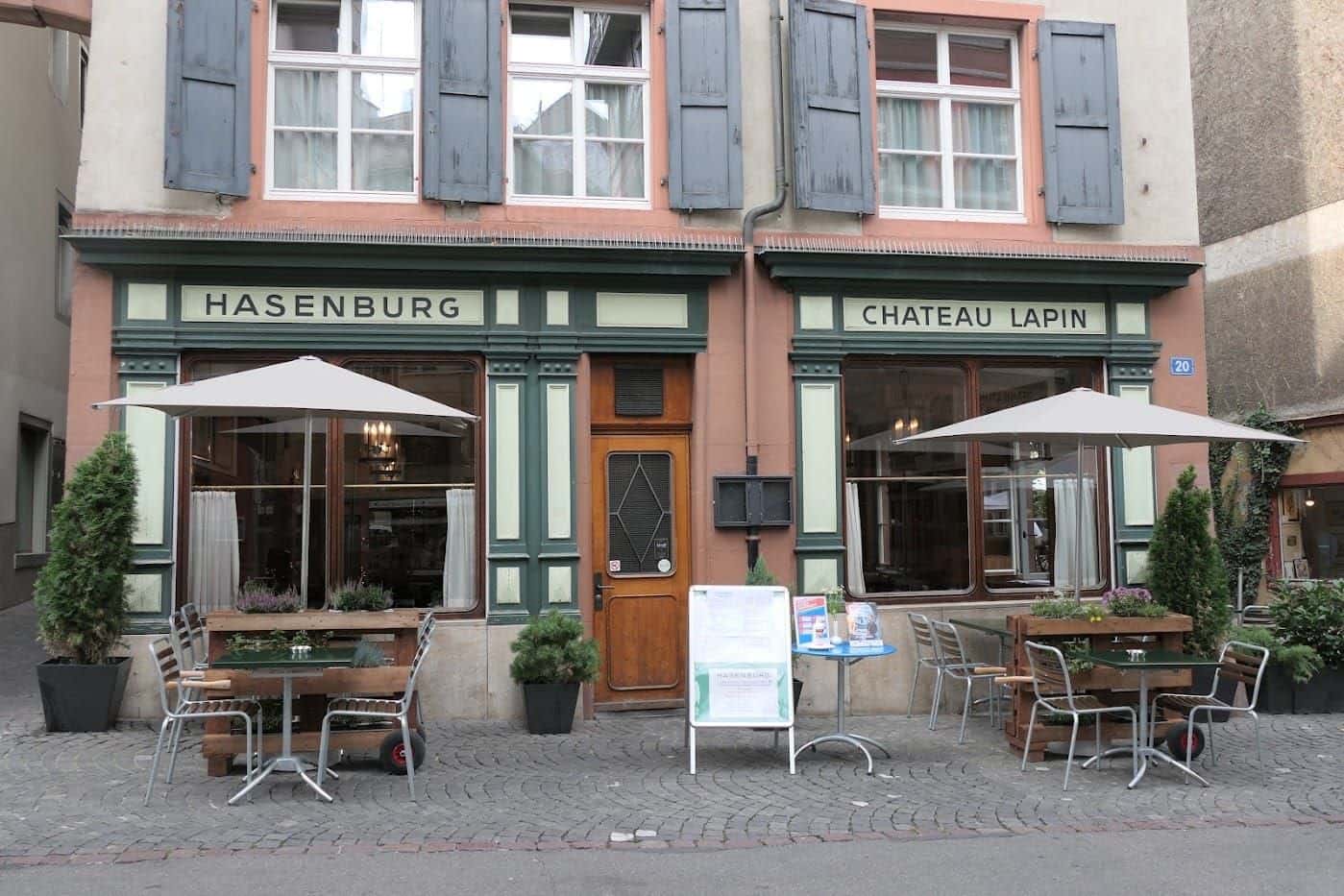
Restaurant Hasenburg★ 4,5 · 493 reviews
The Gifthüttli a few doors along is the place for cordon bleu in many variations, open daily from the morning. Its name goes back to the beer once brewed there.
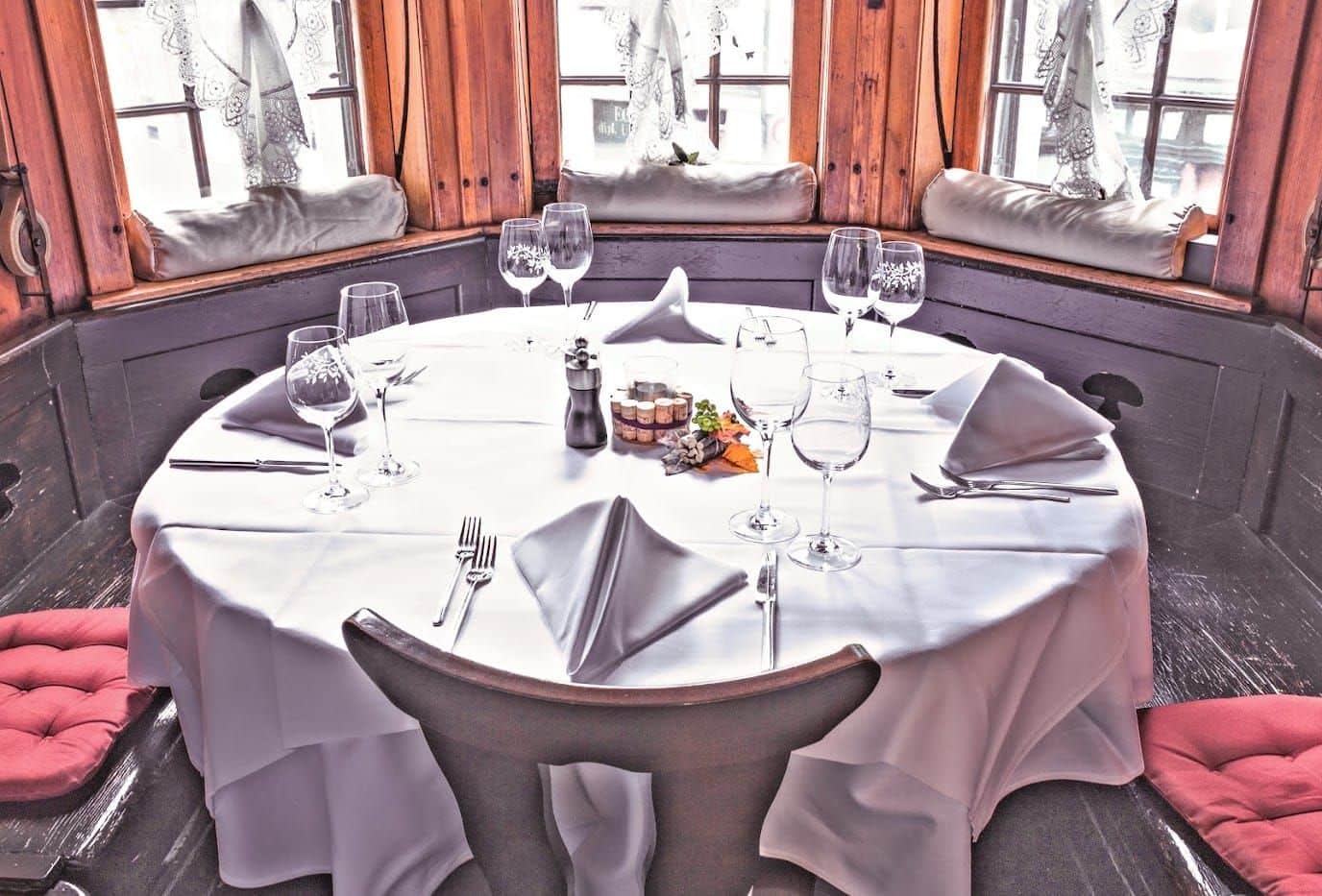
Gifthüttli★ 4,4 · 2,282 reviews
The Löwenzorn on the Gemsberg serves meatloaf, rösti and cordon bleu in panelled rooms, and in summer in the courtyard. Food and drink have been served in the house since 1874.
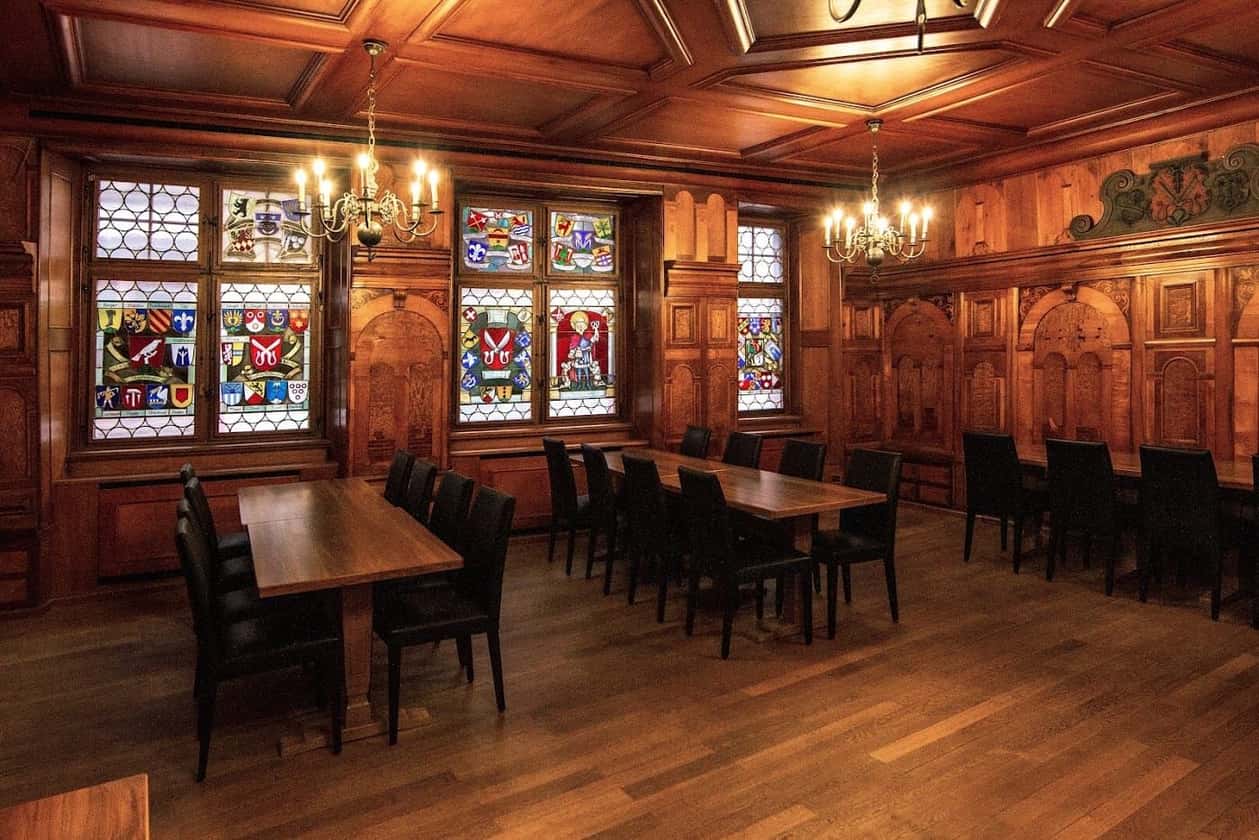
Restaurant Löwenzorn★ 4,4 · 1,398 reviews
The Schnabel on Trillengässlein and the Schlüsselzunft on Freie Strasse complete the picture. One cooks hearty Swiss food with a set lunch, the other in the merchants' guild house of 1488, with a fine-dining Zunftstube and a simpler bistro.
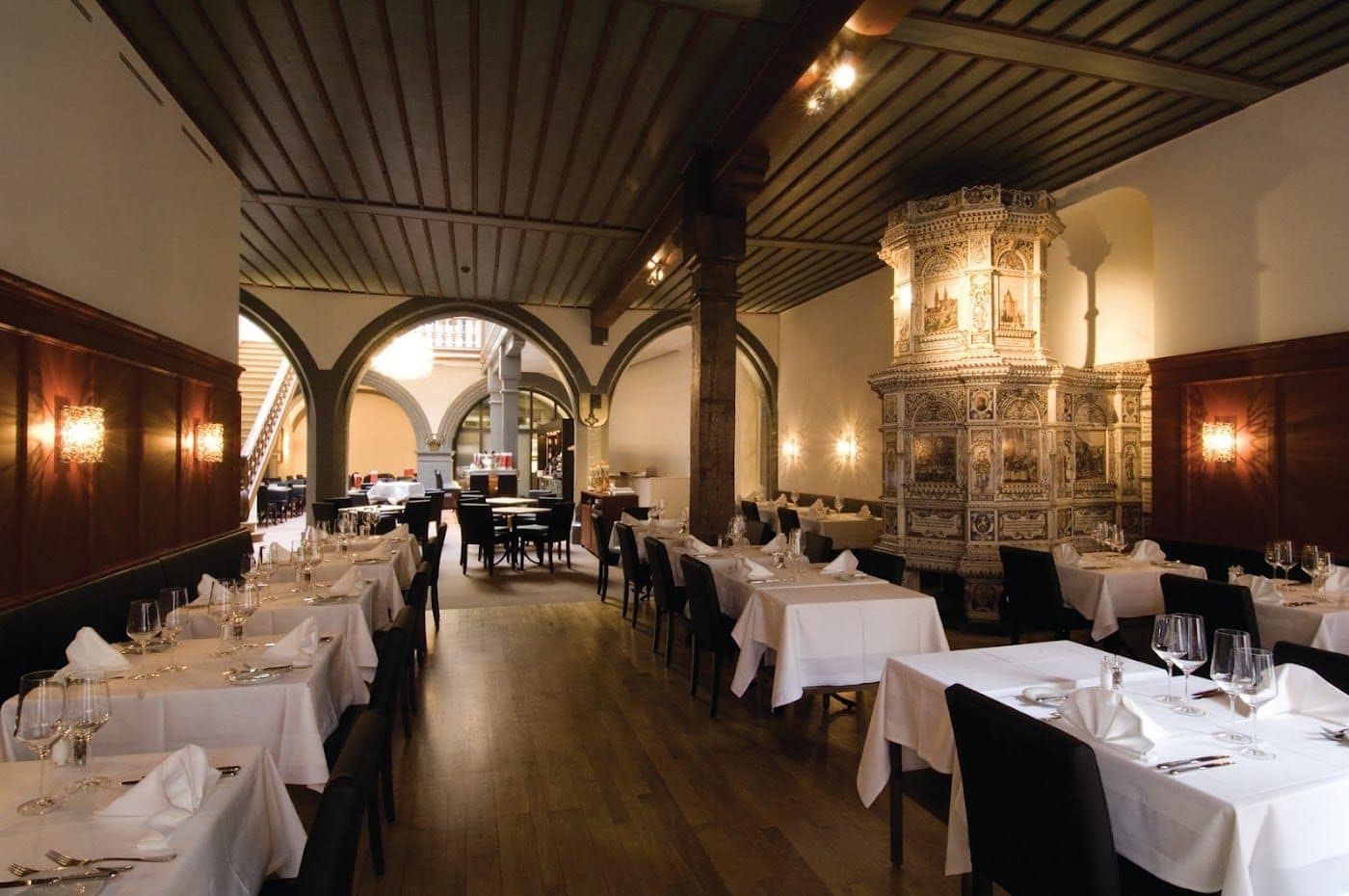
Schlüsselzunft★ 4,6 · 951 reviews
Where do you eat well, and where quickly?
For a fine, quiet meal, go to the St. Alban Stübli on St. Alban-Vorstadt, a former beer parlour with French-influenced seasonal cooking and game in autumn. It only opens on weekdays.
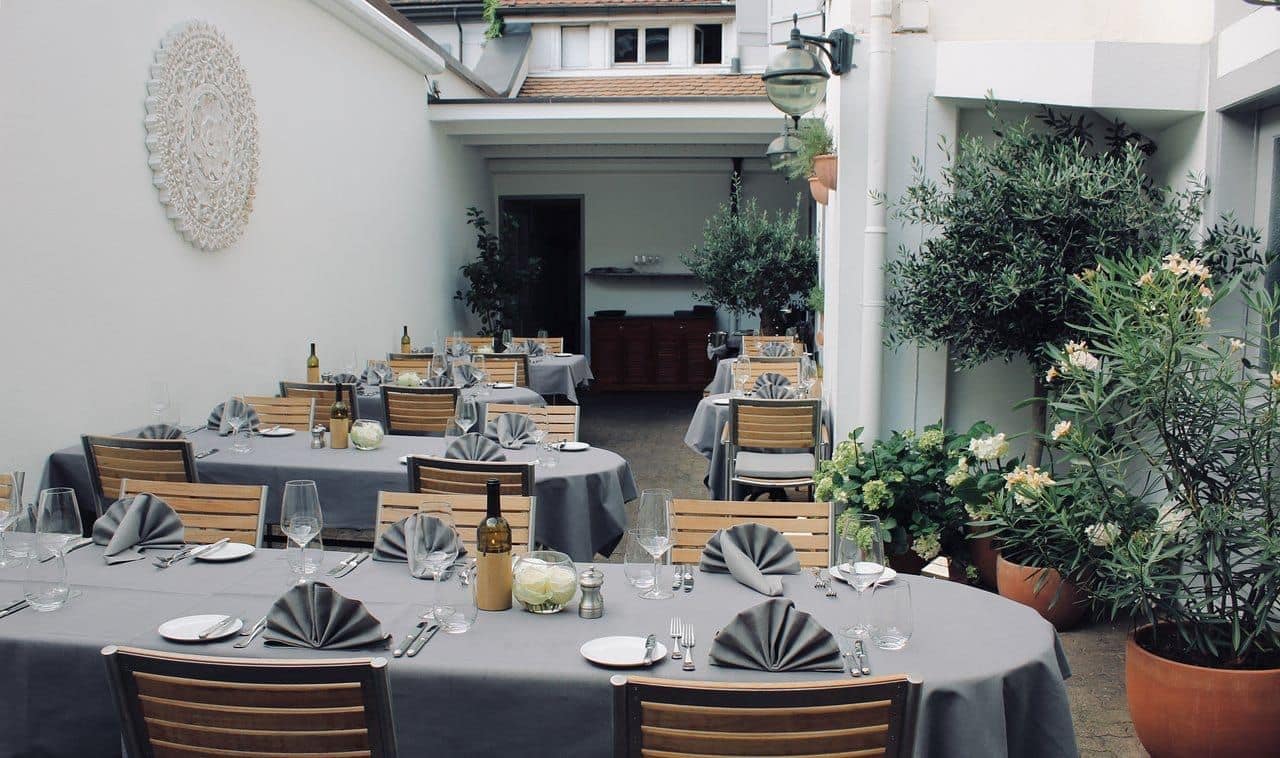
St. Alban Stübli★ 4,8 · 380 reviews
For something quick and cheap, eat at the Markthalle near SBB station, at stalls from around the world under a dome from 1929. With Bierrevier, the hall also has one of the best beer bars in the city.
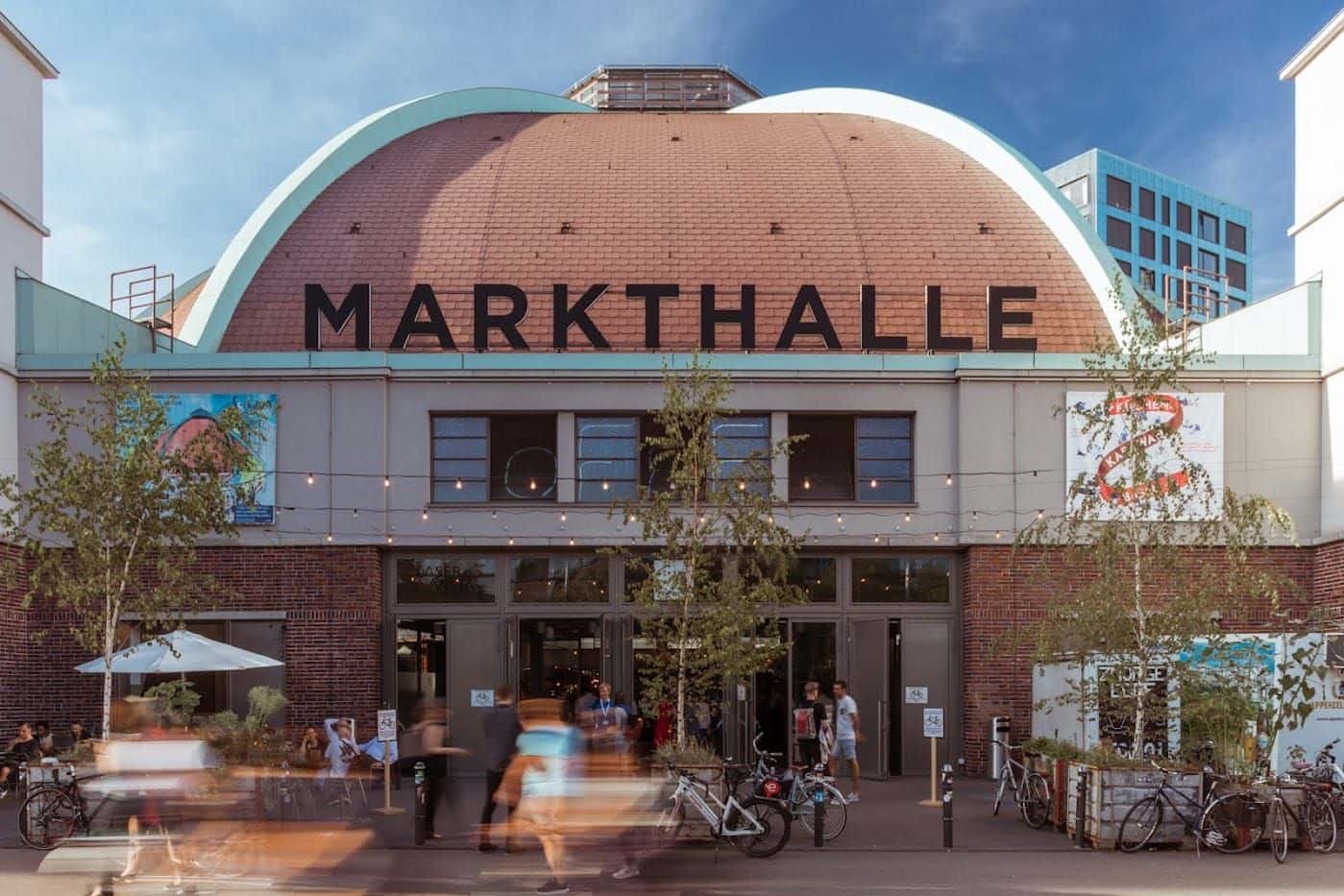
Markthalle Basel★ 4,4 · 9,556 reviews
Which districts do locals eat in?
The Markthalle is also the easiest choice for a group that does not want to eat the same thing: international stalls, cafés, pop-ups and events under one dome. In October 2026, for example, there was an organic brunch on Sundays from 9am to 3pm, plus a café pop-up for one week.
It is not purely a locals' place, as visitors come too. Quality, waiting times and seating vary from stall to stall, and the line-up changes quickly.
Kleinbasel is the district for discovering: bars, international restaurants, cafés, snack bars and newer places, more densely packed than in monumental Grossbasel. The lanes near the Rhine are lively, and small places fill up fast.
Not every place in Kleinbasel is a neighbourhood haunt, and some have long been in every guide. Good signs remain a short menu, regulars at different times of day and decor not designed for photos.
Gundeldingen, known as Gundeli, south of the station, is a residential district with neighbourhood restaurants, bakeries and Middle Eastern, Asian and Mediterranean cooking. You eat well here day to day, without the show, but with less choice on Sundays and between meal times.
What does the riverbank offer?
On fine days Basel residents sit by the Rhine, picnic, get drinks or head to the buvettes, the seasonal bars on the bank. The atmosphere is the point, the food rather secondary.
Buvettes close depending on the weather, season and operator, and their hours are rarely archived. If you want to be sure of a meal, have a plan B nearby; entry points, ferries and the river season are in swimming in the Rhine in Basel.
The buvettes, the bars of Rheingasse and the Old Town wine bars are covered in our guide to Basel bars and nightlife, with opening hours and prices.
How do you eat vegetarian, gluten-free or halal?
Vegetarian is easy in Basel: the Markthalle, international cuisines, brunch cafés and many newer restaurants have meat-free dishes. Be careful with stocks, sauces, cheese made with animal rennet and set menus in traditional places.
Gluten-free is possible but harder: cross-contamination, sauces, breadcrumbs and pastries are the problem, and "no bread" does not mean gluten-free. We found no reliable public directory of places that rule out contamination.
Halal is mainly found in Turkish, Middle Eastern and South Asian cooking, especially in Kleinbasel and Gundeli. What a restaurant means by halal, certified meat or simply no pork, varies, so ask about sourcing and separate preparation.
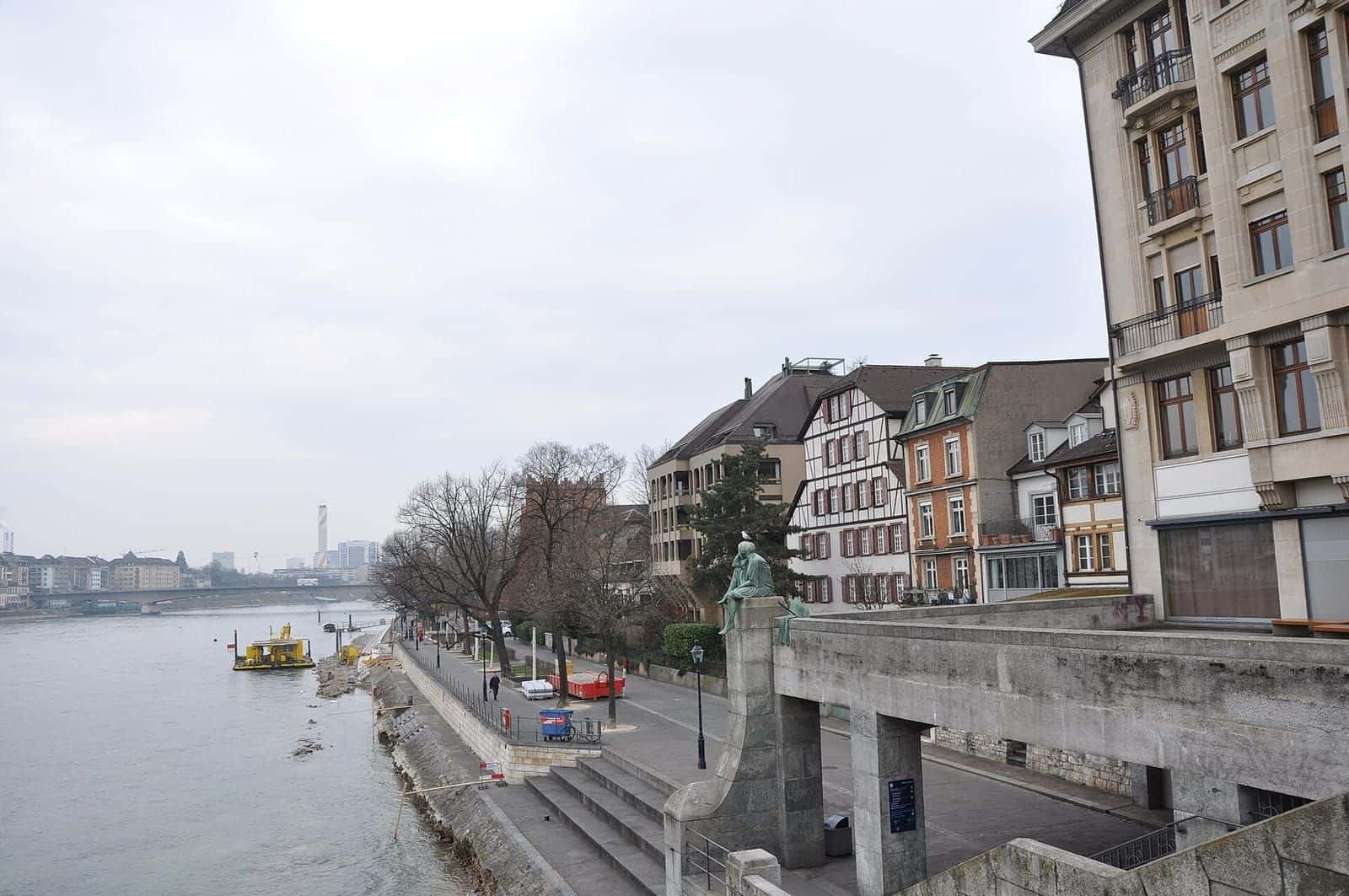
Photo: M.Strīķis, CC BY-SA 3.0, via Wikimedia Commons
What do the guidebooks not tell you?
- Expensive is not the same as good: a high price often pays for location, wages and rent, not just the plate, most clearly in the centre, in hotels and during fair weeks.
- The peaks are seasonal: Art Basel from 17 June 2027 to 20 June 2027, Fasnacht, the Herbstmesse and summer weekends fill the restaurants.
- Opening hours are fragile: buvettes, pop-ups and stalls change or disappear.
- "Local" often means regional: Läckerli, Mehlsuppe, Fasnachtswähe and Mässmogge are from Basel; the rest is Swiss or Upper Rhine.
Around fair week, check our guide to Art Basel, because anyone wanting to eat without a booking then needs patience. The rest of the programme between meals is in things to do in Basel, and the Old Town on foot in the Old Town walk in Basel.
If you are coming for a long weekend and do not want to walk far in the evening, choose your district by food: Kleinbasel for evenings by the Rhine, Gundeli for simple neighbourhood cooking, the Old Town for short distances. How the districts differ for an overnight stay is explained in where to stay in Basel.
Between meals: if you want to discover the city with someone who knows it, there are tours and activities in Basel, from Old Town walks to trips on the Rhine. Anything food-related is stated in each description.
See tours in Basel →Partner link: booking through this link supports our editorial team at no extra cost to you.Sources: websites and menus of the restaurants named (2026), Basel Tourismus, Markthalle Basel (October 2026 programme), basel365 research (specialities, 2025 and 2026 price guides, kitchen hours and tipping practice), Art Basel via MySwitzerland and travel.art (2027 dates).
Frequently asked questions
What is a typical Basel speciality?
How much does dinner cost in Basel?
Do you tip in Basel?
Where can you have brunch in Basel?
Samuel Tschudin
Samuel spent eight years guiding groups through the Old Town, from Münsterplatz to the Rhine promenade. He builds his routes on foot, watch in hand, and cuts whatever does not fit into a real day. He would rather write that a visit is not worth the ticket than pad out a list.